

Natural Living for Families
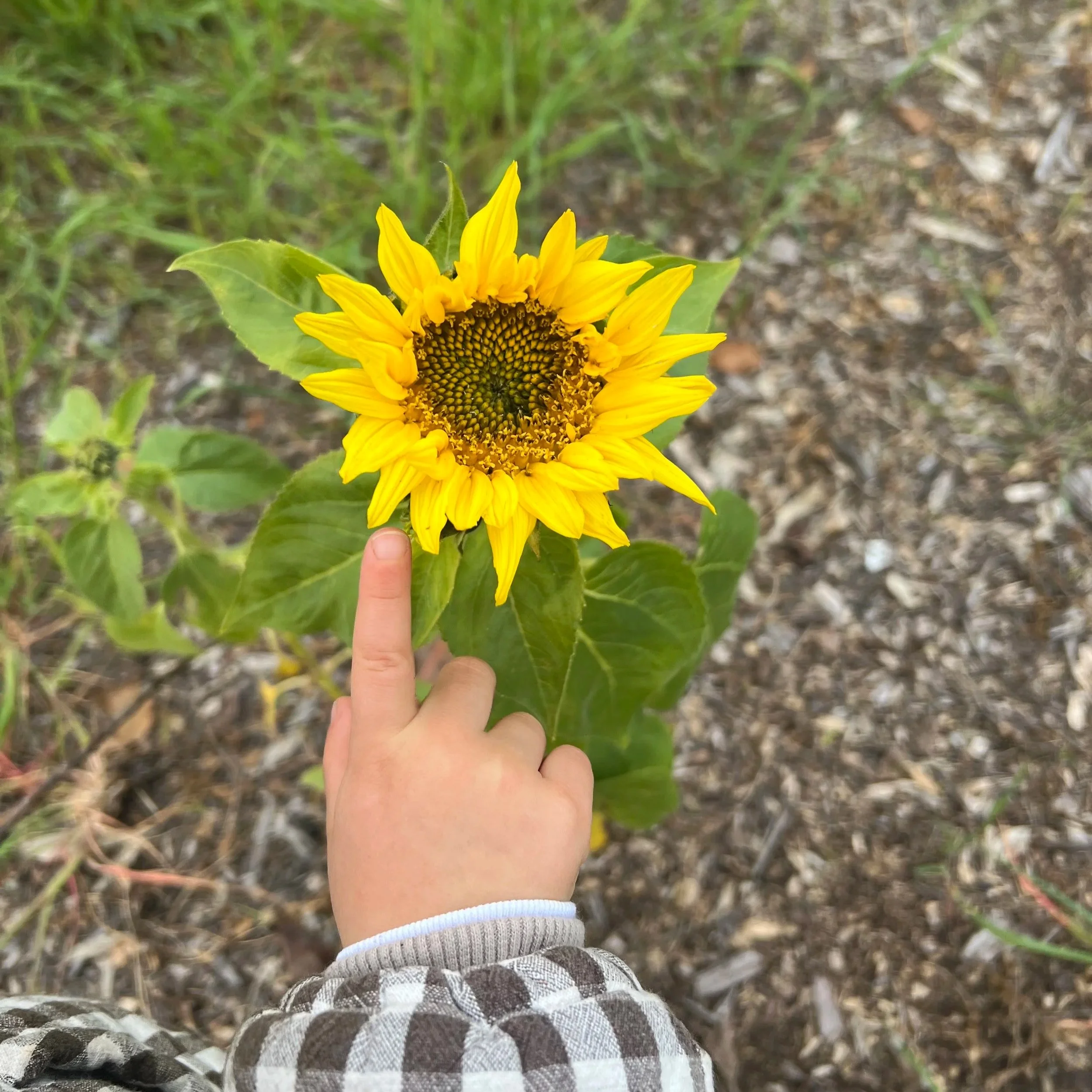
Touching a wild sunflower.
Years ago, I began considering my “family planning” journey with the hopes of becoming pregnant the following year. Throughout that year of preconception, I became more and more interested in natural/non-toxic living. I learned that our diets, lifestyles and environments can have such a profound impact on fertility and health during preconception, during pregnancy, and also on the little humans we share this space with. However, if this post finds you in the middle of your pregnancy, or years down the road after having children - there is still so much for you to take away and implement into your life (wherever you are).
Let’s talk realistic low-tox living. This does not mean you throw out everything you currently own and purchase everything new. What this means is that over time, you pay attention to the ingredients and materials of items you are going to purchase. There are of course some swaps that you can make immediately, but it is not necessary to overhaul the entire home. Like I said, let us be realistic. Ideally, my family would have little to zero synthetic clothing and plastic toys. The reality is that we do own these things, but we do our best to minimize what comes into our home and we are very intentional with new purchases.
While reading through, you may notice that I touch on scents and fragrances multiple times. I highly encourage you to do your own research on this topic, but I am happy to share what I have learned along the way.
Fragrances are considered to be endocrine disruptors because they typically contain phthalates, and phthalates can disrupt your hormones. This affects everyone, of all ages.
Manufacturers are rarely required to fully disclose ingredient lists on product labels. "Fragrances" can hide dozens of chemicals that trigger allergies, migraines, and asthma.
For newborns, fragrances can irritate their developing respiratory system. Even something “natural” such as an essential oil (yes, even lavender) can cause respiratory irritation for babies. Use with caution, or not at all.
An important part of the bonding process is smell; smelling your baby boosts your oxytocin levels and lights-up the dopamine reward centers in your brain, so it makes you feel REALLY good. Smell is also a component of baby being able to recognize you and feel comforted. When we mask these pure biological scents with fragrances we not only risk respiratory and topical irritation, but we also deprive ourselves and our babies from part of the natural bonding process.
Below, I have written about the areas that I believe are most impactful and accessible. My hope is that you do not feel overwhelmed by this list; select one or two items from each category and try implementing them into your family’s life. So, what are some things that you can do to start living more naturally?
**Note** at the end of the page you will find a list of book recommendations and resources. I am not affiliated with any of these brands or resources and do not receive any commission from them.
HOME & ENVIRONMENT
The environment you surround yourself with has a tremendous impact on your family’s mental and physical health, so let us start with the home.
Remove scented products from your home. This includes: candles, laundry detergents, dish soaps, air fresheners, etc. Air fresheners do not clean the air. Instead, they rely on synthetic chemicals and VOCs to mask odors. Rather than removing the source of the smell, they simply overlay it with an artificial fragrance. Alternatively, open your windows to allow fresh air to flow throughout your space. We particularly like The Unscented Company for their hand soap and body soap. Another swap you can make is using wool dryer balls instead of dryer sheets.
Opt for natural fabrics and materials when you are bringing new items into your home, such as: bedding, pillows, mattress, furniture, decorations, rugs, and even flooring! Many new products will off-gas (slow release of chemicals into surrounding air). To mitigate the off-gassing, you can either place items outside after they are unwrapped, or consider purchasing quality items second-hand.
Switch to natural cleaning supplies. Use your ability to critically think about the ingredients in your cleaning supplies. Many people like to make their own solutions for everyday cleaning using vinegar or baking soda.
Phase out plastics and non-stick cookware in the kitchen: cutlery, plates, cups, food storage containers, pots and pans, etc. Instead, opt for ceramic, glass, wood, stainless steel and cast iron. I like glass food storage containers for leftovers, and have been enjoying U-Konserve stainless steel boxes for a lightweight (and kid proof) option, ideal when we are on-the-go.
FOOD
Preparing healthful and nourishing foods for your family and friends is the ultimate TREAT and a wonderful way to show them that you care about them. They will also feel much better after eating a meal that you prepared when it includes an abundance of fresh and vibrant ingredients!
Prioritize foods in their whole form. This means leaving the ultra-processed foods on the shelves, and buying foods as they come naturally (frozen or fresh fruits and vegetables, nuts/seeds, dried legumes, meats, fish and dairy). Your body thrives on whole foods. When you avoid ultra processed foods you are also avoiding the plethora of additives (many of which have been banned in other countries). Processed foods are sold to you under the idea that they are convenient. Buying ultra-processed food may save you time right now, but at what expense on your health? Let us bring back the joy of cooking and preparing our own food.
Organic when possible. If you are on a budget and cannot afford to buy everything organic, that is okay. Start where you can and check out the EWG’s Clean 15 and Dirty Dozen to help you select which items to prioritize organic vs conventional. Even better, try growing some of your own produce at home. It doesn’t have to be a big bountiful garden, just try a few small pots of herbs that you like incorporating into your recipes. Children love watching plants grow and being part of that process.
Hydrate with water and teas. Add citrus or other fruits to your water if you want some flavor. Replace coffee creamers with your favorite plant milk or dairy milk. Blend fresh or frozen fruit in a blender and freeze in popsicle molds.
PERSONAL
It is just as important to consider what you put in your body as well as on your body.
If you are pregnant or breastfeeding, consider reviewing your beauty, skin-care and hair-care routines. What products are you currently using? Are they working well for the intended purpose? Now, consider their safety. 15 Minute Beauty is a great resource that has information on pregnancy and nursing safe products. Link to site below.
Our reproductive organs are very sensitive, so it is important to consider what is touching them. Switching to organic pads and tampons, or using a diva cup are all great options. If you experience discomfort while wearing tampons or diva cups, or simply prefer to allow the blood to flow out of your body freely, consider pads or period underwear. For reusable and non-toxic options, check out Lunam, GladRags or Hannah.
Stop using perfume and scented lotions or deodorants. It can be very hard to find unscented hair products, but they do exist. As I mentioned above, scented products are endocrine disruptors. Additionally, if you are a new mom, your natural scent is so important to the bond you create with your baby. Babies LOVE the scent of their mothers (as stinky as it may seem to you), and they use this scent to determine if you are near and to feel safe and secure. Also, regarding deodorant, the one you have been using for a while now will likely lose its effectiveness postpartum due to your change in hormones. It is up to you if you want to try finding one that “works” or if you want to go au naturel like I do. After discontinuing use of deodorant , you may even find that you become less stinky over time.
When purchasing new clothes and undergarments, opt for natural fibers like cotton, wool and linen. This is important for your own health, but especially when you have a newborn who you will be holding close and carrying around. There is no need to do a closet overhaul, just make sure you have enough natural fiber t-shirts or sweaters that you can rotate through during this season of life.
Did you know? You can hang natural fiber clothing outside for a quick refresh. Any food or body odors will be pulled out of the material. This does not work with synthetic materials which hold and trap scents.
BABY
Last but certainly not the least important on this list, is the baby category. Babies are so precious and I know we can all agree that they deserve the absolute best. However, just because something is being sold for a baby to use or wear (or eat), does not mean that it has been properly tested for safety. Also, please remember that your baby does not need much from the material world, your love and care matter the most.
No scented products. The baby industry has tried to make us believe that our babies need to smell like lavender or baby powder, but did you know that babies have their own naturally splendid scent? Please don’t cover it up with lotions, perfumes or detergents. How to handle scents with visitors: be clear and ask your visitors to refrain from wearing perfumes and scents when they come over to visit. If you have ever allowed a visitor to hold your beloved newborn and then receive your baby back smelling like Aunt Patty, then you know exactly what I am talking about.
Natural fiber baby clothes, organic when possible. Forever chemicals and microplastics have been found in baby clothes and socks, even those labeled as 100% cotton. Prioritizing organic and looking for the GOTS or OEKO-TEX® STANDARD 100 label on baby and children’s clothing can help ensure you are buying the safer option. If you already own clothing made with synthetic materials (me too!), there is no need to freak out - in a few wash cycles the processing chemicals and excess dyes are reduced significantly. Next time you shop, opt for natural fibers, and don’t stress about the things you already own. Focus on the clothing items that are in close-contact with their skin (undies, socks, PJs, bedding, etc.).
Consider cloth diapering and/or Elimination Communication (EC). Cloth diapering uses reusable and washable materials that are safer and gentler on baby’s skin, not to mention they significantly reduce landfill waste and raw material consumption. There are many different kinds of cloth diapering systems (all-in-one, pocket, prefolds and flats). Now onto Elimination Communication (EC), this is an infant potting method that has been used by humans for… pretty much all time. EC honors your baby’s biological needs by paying attention to baby’s queues and pottying them in a sink or receptacle. This is an incredibly accessible, sustainable and doable option. EC can be done with cloth or disposable diapers. Finally, EC and cloth diapering will save you $$$.
Exclusive breastfeeding is of course the most natural and sustainable option for feeding your baby, we all know the saying “breast is best”. However, I personally know how challenging breastfeeding can be, especially without adequate support. I was not able to breastfeed my first baby as long as I wanted to, and it was heartbreaking for me. In the end, I am grateful that formula exists and helped to nourish and grow my baby. With that said, it is important to consider the formula brand and ingredients. Donor milk is another wonderful option, if you prefer to feed your baby human milk instead of animal milk. If you are on a budget, I highly recommend that you invest in quality breastfeeding education while you are still pregnant so that you can set yourself up for breastfeeding success. Breastfeeding is the only “free” option, and formula or donor milk can add up over time.
Feed your child what your family is eating. To save you time (and sanity) start this from the beginning. With a baby, you will introduce solid foods at a certain point, and what worked well for us was to set aside one ingredient from our meal and we would make it baby friendly by cooking it longer (to make it mushy) or reducing the spice level. As baby gets more coordinated with motor skills and senses, you can simply feed them a smaller portion of what you are having! Another note here is to avoid packaged pouches and baby foods (including puffs or cereals) as much as possible. These products are often recalled due to heavy metal contaminants or other issues. I have never purchased these for my babies; and I don’t say this to brag, but to let you know it is possible. We are often on-the-go, traveling, and we have always been able to find or pack whole-food options for every age and ability.
In our family, our goal has always been to expose our children to as many different foods as possible for the sake of enjoyment and nourishment. We ask our children to smell and taste, and we invite them into the kitchen to experience the joy of cooking - a life skill for everyone.
NOTE: My children have not dealt with any developmental delays or aversions, which has undoubtedly made our food journey smoother than others. If you find yourself navigating a challenging feeding journey, please find a Speech-Language Pathologist (SLP) or Occupational Therapists (OT) who specializes in feeding, and can evaluate oral motor function and help your baby adjust to different food textures.
BOOKS & RESOURCES
Wicker, Alden. To Dye For: How Toxic Fashion Is Making Us Sick–and How We Can Fight Back. G.P. Putnam’s Sons, 2023.
Romm, Aviva. The Natural Pregnancy Book: Your Complete Guide to a Safe, Organic Pregnancy and Childbirth with Herbs, Nutrition, and Other Holistic Choices. Third Edition. Ten Speed Press, 2014.
Nichols, Lily. Real Food for Pregnancy: The Science and Wisdom of Optimal Prenatal Nutrition. 2018.
https://www.ewg.org/foodnews/dirty-dozen.php
https://www.ewg.org/foodnews/clean-fifteen.php
https://www.15minutebeauty.com
https://www.consumerreports.org